
Forecasting and Budgeting Process: The CFO’s Strategic Framework for FP&A, Rolling Forecasting, and Business Performance
Table of Contents
Toggle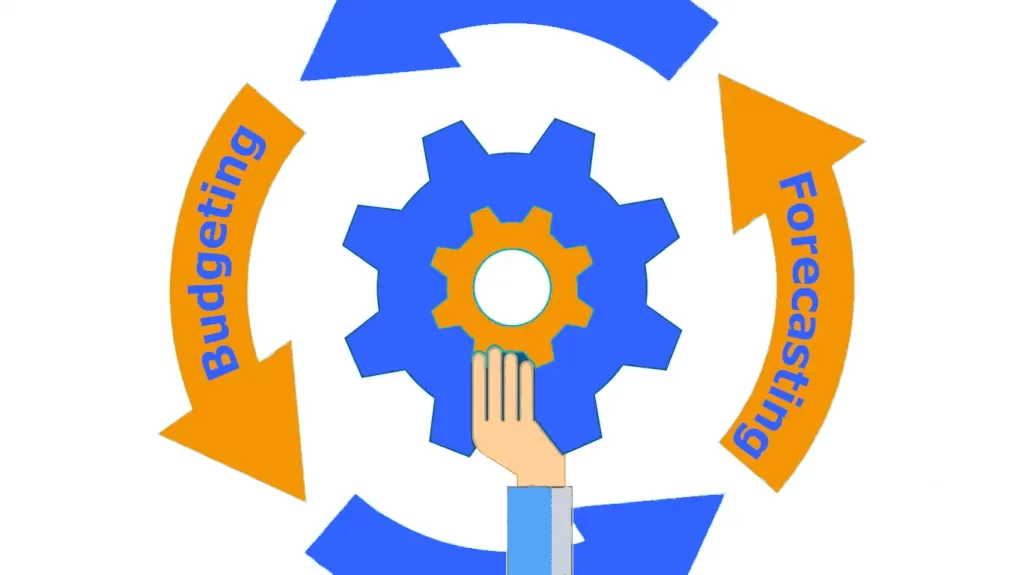
In today’s volatile business environment, the Forecasting and Budgeting Process has evolved from an annual finance exercise into a strategic capability that shapes enterprise performance. Organizations can no longer rely on static budgets and historical assumptions when market conditions, customer demand, and operational priorities change continuously. Modern finance leaders require an integrated planning approach that enables faster decisions, greater agility, and more accurate financial outcomes.
Modernizing this architecture requires an integrated planning & forecasting approach that aligns strategic objectives, operational drivers, and financial targets. Before advancing toward continuous planning, CFOs must evaluate driver-based forecasting vs traditional forecasting to determine which financial forecasting method delivers superior FP&A accuracy and strengthens cross-functional collaboration.
This blog presents a practical framework for designing and executing a world-class Forecasting and Budgeting Process. It explores the essential process steps, governance principles, budgeting methodologies, forecasting best practices, common implementation challenges, and the role of technology in modern planning. Whether your organization is modernizing its Budget Cycle, implementing Driver-Based Forecasting, or advancing toward continuous planning, this article provides finance leaders with the strategic insights needed to transform budgeting and forecasting into a competitive advantage that improves business performance and supports confident executive decision-making.
Forecasting and Budgeting Process: Why It Is the Foundation of Strategic Financial Planning and Business Performance
The Forecasting and Budgeting Process is far more than an annual finance exercise, it is the mechanism through which an organization translates strategy into financial commitments and operational priorities. Every investment decision, resource allocation, and performance target originates from this process. When forecasting and budgeting are fragmented, driven by disconnected assumptions, or influenced by departmental bias rather than business realities, the consequences extend well beyond finance. They weaken strategic alignment, reduce organizational agility, and compromise decision quality across the enterprise.
Leading organizations recognize that the value of a world-class Financial Planning Process is not measured solely by forecast accuracy. Its greater contribution lies in creating a disciplined planning environment where assumptions are transparent, business drivers are clearly defined, and cross-functional leaders align around a single view of future performance. A robust Forecasting and Budgeting Process provides leadership with the confidence to evaluate trade-offs, respond to market changes, and allocate capital based on evidence rather than intuition.
Executive Insight: The objective of modern FP&A is not to predict the future with perfect precision, it is to build a planning process that continuously improves decision quality. Organizations that embed transparency, driver-based planning, and enterprise-wide alignment into their forecasting and budgeting processes consistently outperform those that treat budgeting as a periodic financial exercise rather than a strategic management discipline.
Forecasting and Budgeting Process: A 7-Step Framework for High-Performance FP&A and Financial Planning
A high-performing Forecasting and Budgeting Process is not a sequence of disconnected finance activities, it is a structured planning framework that aligns strategy, operations, and financial performance. Leading organizations replace annual budgeting cycles with disciplined, driver-based planning that improves forecast accuracy, accelerates decision-making, and enables continuous business adaptation.
Step 1: Establish the Strategic Foundation
Every effective Budgeting Process begins with strategy not spreadsheets. Finance leaders should translate the organization’s three-to-five-year strategic objectives into annual financial targets, including revenue growth, profitability, capital investment, workforce planning, and cash flow expectations. These strategic boundaries provide the framework within which business units develop their plans.
Before defining growth initiatives, establish a baseline or momentum forecast that reflects business performance without additional strategic interventions. This creates an objective starting point, distinguishes organic performance from planned growth, and ensures future investments are evaluated against measurable business outcomes rather than optimistic assumptions.
Step 2: Define Business Drivers and Planning Assumptions
Having the mechanics of driver-based forecasting explained to the executive team is critical, as this strategic FP&A methodology transforms forecast accuracy. High-performing FP&A teams build forecasts around operational drivers rather than historical financial line items. Deploying pre-built architecture like UVID’s Budgeting 360 accelerator enables finance functions to instantly link revenue, profitability, and cash flow to measurable business variables, compressing the transition from static spreadsheets to a driver-based model.
Equally important is establishing a single set of enterprise assumptions agreed upon by finance, sales, operations, and HR before planning begins. Standardized assumptions improve forecast consistency, strengthen accountability, and make performance variances easier to identify and explain.
Step 3: Build Bottom-Up Plans Within Strategic Guardrails
Knowing exactly how to build a driver-based forecasting model that improves forecast accuracy and strategic decision-making ensures business units develop detailed operating plans within an agreed framework. Finance then continuously evaluates these submissions against enterprise objectives, preventing late-stage reconciliation.
This balance between bottom-up operational insight and top-down strategic direction ensures departmental priorities remain aligned with enterprise objectives, reducing planning iterations and improving decision quality.
Step 4: Strengthen Plans Through Scenario Modeling
Static budgets assume a single future. High-performing organizations recognize that uncertainty is inevitable and build multiple scenarios into the Financial Planning Process.
A robust planning framework typically includes a Momentum Case, Base Case, Upside Case, and Downside Case, each supported by explicit financial assumptions and probability assessments. Scenario planning enables leadership to evaluate alternative capital allocation decisions, prepare contingency actions, and respond quickly as business conditions evolve.
| Scenario | Revenue Outlook | Strategic Response | Planning Objective |
|---|---|---|---|
| Momentum Case | Current business trajectory | Maintain existing operations | Establish baseline performance |
| Base Case | Expected business growth | Execute approved strategic initiatives | Primary operating plan |
| Upside Case | Higher-than-expected demand | Accelerate investment and expansion | Capture growth opportunities |
| Downside Case | Market slowdown or disruption | Preserve cash and prioritize critical investments | Strengthen business resilience |
Step 5: Consolidate Plans Across the Enterprise
The planning process should integrate financial and operational plans into a single enterprise model covering the income statement, balance sheet, and cash flow. Modern Enterprise Performance Management (EPM) platforms automate data consolidation, eliminate manual reconciliation, and provide leadership with a single source of truth for decision-making.
Integrated planning improves collaboration across finance, operations, sales, and executive leadership while significantly reducing planning cycle times.
Step 6: Validate, Prioritize, and Approve Strategic Investments
Executive review should focus on strategic decisions rather than across-the-board cost reductions. Leadership should evaluate whether proposed investments support enterprise priorities, improve competitive positioning, and generate measurable financial returns.
The approved budget should establish clear resource allocation priorities while retaining sufficient flexibility to respond to changing market conditions throughout the year.
Step 7: Monitor Performance Through Continuous Planning
The planning cycle does not end with board approval; it evolves into continuous performance management. By adhering to core forecasting and budgeting best practices, organizations establish a framework for strategic planning and sustainable growth, allowing finance to continuously compare actual performance against the plan and update rolling forecasts.
Modern AI-enabled FP&A platforms further strengthen this process by automating variance analysis, refreshing forecasts with real-time operational data, and highlighting material exceptions that require executive attention. This transforms budgeting from an annual planning event into a continuous strategic capability that supports faster, evidence-based decisions.
Executive Insight: World-class organizations view the Forecasting and Budgeting Process as a continuous business management discipline rather than an annual finance cycle. By combining strategic alignment, driver-based planning, scenario modeling, integrated enterprise planning, and rolling forecasts, finance becomes a proactive partner in enterprise performance, enabling leadership to allocate capital with confidence, respond to uncertainty with agility, and improve business performance through better decisions.
Forecasting and Budgeting Process: How AI-Enabled EPM Transforms Every Stage of Financial Planning
The greatest value of AI-enabled Enterprise Performance Management (EPM) is not simply faster consolidation, it is the transformation of planning from a periodic exercise into a continuous decision-making capability. Traditional Forecasting and Budgeting Processes often require weeks to develop and evaluate a handful of scenarios, limiting an organization’s ability to respond to changing market conditions. AI-powered EPM platforms fundamentally change this model by generating, evaluating, and refreshing hundreds of planning scenarios in near real time as business assumptions evolve.
This shift redefines the role of finance. Rather than spending valuable time assembling data and rebuilding models, FP&A teams focus on interpreting scenario outcomes, evaluating strategic trade-offs, and advising leadership on the actions that create the greatest business value. Finance moves from being the producer of forecasts to becoming the orchestrator of enterprise decision intelligence.
At UVID Consulting, our accelerated implementation approach integrates AI capabilities throughout the Forecasting and Budgeting Process using leading EPM platforms. By embedding intelligent automation, driver-based planning, and continuous forecasting into every stage of financial planning, organizations can significantly shorten planning cycles, improve forecast confidence, and replace static annual budgets with agile, continuously updated plans that support faster and better executive decisions.
Executive Insight: AI does not replace financial planning, it elevates it. Organizations that combine AI-enabled EPM with disciplined planning processes transform budgeting from an annual reporting exercise into a strategic capability that continuously improves business performance and competitive agility.
From Budgeting to Strategic Business Performance: The Future of Financial Planning
The Forecasting and Budgeting Process is no longer defined by annual budgets or static financial models. It has become a strategic capability that enables organizations to anticipate change, allocate resources intelligently, and execute strategy with greater confidence. By integrating driver-based planning, rolling forecasts, scenario modeling, and AI-enabled Enterprise Performance Management (EPM), finance evolves from producing budgets to guiding enterprise decisions.
Organizations that modernize their planning process gain more than operational efficiency; they build the agility to respond to market volatility. Ultimately, achieving forecasting and budgeting excellence is the foundation of strategic decision-making and enterprise performance, elevating finance from producing static reports to guiding enterprise strategy.
Table of Contents
ToggleFAQs
The Forecasting and Budgeting Process is a structured approach to translating business strategy into financial plans, operational targets, and resource allocation decisions. It combines budgeting, forecasting, scenario planning, and performance monitoring to help organizations manage growth and respond to changing business conditions. More than a finance exercise, it creates enterprise-wide alignment by connecting strategic objectives with operational execution. Organizations with mature planning processes make faster decisions, improve forecast accuracy, and allocate capital more effectively than those relying on static annual budgets.
Although closely related, budgeting and forecasting serve different purposes within the Financial Planning Process. A budget establishes financial targets and resource allocations for a defined period, providing a baseline for performance management. A forecast is dynamic, continuously updating financial expectations as business conditions, market trends, and operational drivers evolve. Leading organizations integrate both disciplines through Rolling Forecasts, enabling finance teams to maintain strategic agility while preserving financial discipline.
A best-in-class Forecasting and Budgeting Process typically includes seven stages: establishing strategic objectives, defining business drivers and planning assumptions, developing bottom-up budgets within top-down financial targets, conducting scenario planning, consolidating enterprise plans, obtaining executive approval, and continuously monitoring performance through rolling forecasts. This structured framework enables FP&A teams to improve planning accuracy, strengthen cross-functional collaboration, and support evidence-based decision-making.
Modern Enterprise Performance Management (EPM) platforms use artificial intelligence to automate data integration, driver-based forecasting, variance analysis, and scenario modeling. Rather than spending time consolidating spreadsheets and rebuilding financial models, finance teams can evaluate hundreds of planning scenarios, continuously update forecasts, and identify business risks in real time. AI-enabled EPM transforms the Forecasting and Budgeting Process from a periodic planning activity into a continuous decision intelligence capability that improves forecast accuracy, planning speed, and executive confidence.
High-performing organizations share several defining characteristics: they align financial plans with corporate strategy, build forecasts around operational business drivers, incorporate rolling forecasts and scenario planning, establish strong data governance, and leverage AI-enabled FP&A and EPM platforms to automate planning activities. Most importantly, they treat the Forecasting and Budgeting Process as an ongoing strategic management discipline rather than an annual budgeting exercise. This enables finance leaders to make faster, more informed decisions while improving business agility, financial resilience, and long-term enterprise performance.